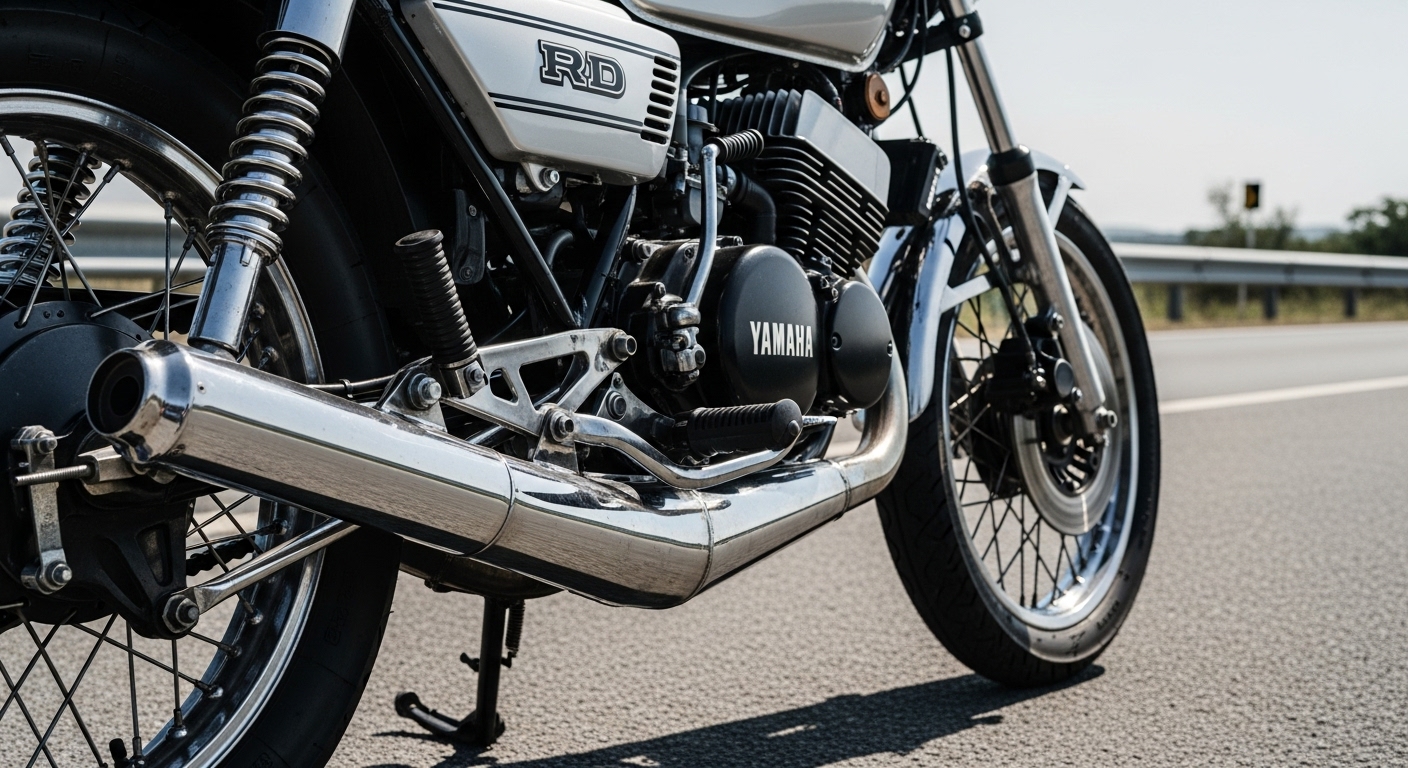
The Escapamento RD, or RD exhaust system, is far more than a metal pipe — it’s a symbol of power, attitude, and identity. For decades, the RD motorcycles from Yamaha have represented the golden era of two-stroke performance. And at the heart of that unmistakable roar and raw acceleration lies one key component: the exhaust.
This article explores everything you need to know about the RD exhaust system — its history, mechanics, types, performance effects, maintenance, and the passion it evokes among riders.
1. The Legacy of the RD and Its Iconic Exhaust Sound
The Yamaha RD series (Race Developed) was born in the 1970s with a mission — to bring race technology to everyday riders. These bikes quickly gained legendary status due to their lightweight design, two-stroke engines, and incredible power-to-weight ratio.
The exhaust system played a major role in shaping that identity. Unlike modern four-stroke exhausts, RD pipes were engineered to enhance resonance, scavenging, and exhaust gas return, providing the bike with both explosive power delivery and a signature sound that riders still seek today.
1.1 The RD 350 – The Widow Maker’s Voice
Among all RD models, the Yamaha RD 350 is the most famous — and notorious. Nicknamed “The Widow Maker” because of its intense acceleration and unpredictable handling, it featured an exhaust system that made it truly iconic.
The stock RD 350 pipes had a unique expansion chamber design that maximized mid-range torque and top-end horsepower, while producing that sharp, metallic crackle that defines a classic two-stroke engine.
Over time, many riders upgraded to aftermarket or handmade exhausts — not just to improve performance, but to achieve that perfect two-stroke scream that turns heads wherever it goes.
2. How the RD Exhaust System Works
The exhaust system of a two-stroke motorcycle, such as the RD, is a masterpiece of engineering.
It doesn’t merely push out burnt gases — it actually helps control how the engine breathes and performs.
2.1 The Resonance Effect
The RD exhaust relies on what’s called the resonance effect.
When exhaust gases exit the cylinder, they create pressure waves that travel through the exhaust pipe. The carefully designed shape of the expansion chamber causes some of those waves to bounce back toward the cylinder, pushing unburned fuel-air mixture back into the combustion chamber.
This process significantly increases engine efficiency and power output — one of the reasons why RD engines produce so much punch relative to their size.
2.2 Main Components of the RD Exhaust
A typical RD exhaust system consists of three main parts:
- Header or manifold: Connects the engine to the pipe and directs exhaust gases outward.
- Expansion chamber: The most critical part, responsible for resonance and power gain.
- Silencer (or muffler): Reduces noise levels without sacrificing performance.
Each curve and cone in the exhaust is designed with precision to balance sound, speed, and power.
3. Types of RD Exhaust Systems
Today, RD enthusiasts have a variety of exhaust systems to choose from — from original replicas to high-performance racing pipes.
3.1 Original (OEM) Exhaust
The original Yamaha RD exhaust is the go-to option for restoration projects and purists. It offers:
- Authentic vintage appearance
- Balanced performance
- The classic two-stroke tone that defined the RD era
3.2 Performance or Racing Exhaust
A performance RD exhaust is designed for riders who want more speed, torque, and a louder, more aggressive sound.
Typically made from stainless steel, carbon fiber, or lightweight aluminum, these exhausts improve:
- Horsepower by up to 10–20%
- Throttle response
- Weight reduction
- Exhaust flow efficiency
They are ideal for tuning enthusiasts who want to unlock the full potential of their RD 135, RD 250, or RD 350.
3.3 Custom or Handmade Exhausts
Some riders prefer custom-built RD exhausts, fabricated by local specialists who tune every angle and curve to the rider’s specific setup.
These handcrafted systems often use TIG welding and precision bending for perfect flow and a one-of-a-kind look and sound.
4. Materials Used in RD Exhaust Systems
The material used in an RD exhaust dramatically affects sound, performance, and durability.
| Material | Advantages | Considerations |
| Mild steel (carbon steel) | Classic metallic sound, easy to weld | Needs a protective coating to avoid rust |
| Stainless steel | Rust-resistant, durable, clean look | Slightly heavier, higher cost |
| Aluminum | Lightweight, modern appeal | Not ideal for very high heat zones |
| Carbon fiber | Ultra-lightweight, racing style | Expensive and mainly aesthetic |
| Titanium | Best strength-to-weight ratio | Rare and costly, usually for track builds |
Each material gives the exhaust its own acoustic signature — from deep and raw to crisp and sharp.
5. Performance Impact of an RD Exhaust
Changing the exhaust system on an RD isn’t just for looks or sound. It can profoundly affect the way the motorcycle performs.
5.1 Power Increase
A well-designed performance exhaust can deliver up to 15% more horsepower by improving gas flow and back pressure balance.
This is especially noticeable in mid-range acceleration — where RD engines truly come alive.
5.2 Reduced Weight
Performance exhausts often weigh 30–50% less than the original steel ones, improving handling and agility — crucial for quick cornering or drag runs.
5.3 Carburetor and Jetting Adjustments
Whenever a new exhaust is installed, the carburetor must be re-tuned.
Failing to adjust the air-fuel ratio can lead to overheating, a lean mixture, or power loss. A professional jetting setup ensures the RD runs at peak efficiency with its new exhaust.
6. The Sound of the RD Exhaust: A Two-Stroke Symphony
No article about escapamento RD would be complete without talking about the sound.
The RD’s two-stroke exhaust note is instantly recognizable — a sharp, rhythmic, metallic “ring-ding-ding” that echoes nostalgia and adrenaline.
This sound isn’t just noise; it’s the audible result of the engine’s rapid firing and the expansion chamber’s resonance.
For many riders, the roar of an RD 350 with open pipes is pure music — a raw, mechanical heartbeat that embodies freedom on two wheels.
7. Maintenance and Care for RD Exhaust Systems
Proper maintenance ensures both performance and longevity of your RD’s exhaust system.
7.1 Regular Cleaning
Two-stroke exhausts accumulate oil residue and carbon deposits.
It’s recommended to clean the exhaust internally every 5,000 km or whenever performance starts to dip. Solvents, degreasers, or thermal burning methods can be used carefully to remove buildup.
7.2 Inspect for Leaks
Leaks around joints and flanges can affect performance and alter the exhaust tone. Check for signs of oil leakage or carbon marks around connections.
7.3 Rust Prevention
If your exhaust is made from carbon steel, apply heat-resistant paint or chrome coating to prevent corrosion, especially in humid environments.
8. Customization and Aesthetic Appeal
Beyond function, the RD exhaust is a statement piece.
Enthusiasts often customize their bikes with unique paint jobs, polished mufflers, or retro-inspired finishes that celebrate the racing heritage of the RD lineup.
Popular styles include:
- Chrome polished pipes for a classic look
- Matte black coatings for modern aggression
- Dual under-belly pipes for racing builds
A customized exhaust not only enhances performance but also defines the bike’s personality — raw, elegant, or rebellious.
9. Popular RD Exhaust Brands and Options
In Brazil and around the world, several brands specialize in RD exhaust systems. Among the most respected are:
- Pro Tork RD Series – affordable, reliable, and performance-focused
- Coyote Racing Exhausts – deep sound and premium build quality
- Roncar Performance – designed for racing and tuned flow
- JDM Performance Custom – handmade exhausts for exact engine specs
- Tork Master RD 350 – authentic replica of classic racing pipes
Each brand offers variations suited for RD 135, RD 250, and RD 350 models, allowing riders to choose based on sound, power, and design preference.
10. The Cultural and Emotional Value of the RD Exhaust
The escapamento RD is more than metal — it’s emotion forged in sound and speed.
For many riders, especially those who grew up in the two-stroke era, the smell of burning oil and the scream of a tuned RD 350 evoke pure nostalgia.
Even in today’s world of advanced four-stroke and electric motorcycles, the RD’s exhaust note remains a symbol of old-school adrenaline — simple, raw, and untamed.
Conclusion
The Escapamento RD represents a perfect balance between engineering, art, and passion.
It transforms a Yamaha RD from a simple motorcycle into a living legend — one that growls, breathes, and echoes with the spirit of two-stroke performance.
Whether you’re restoring a vintage RD 135, tuning a race-ready RD 350, or simply chasing that signature sound, one truth remains:
Nothing captures the essence of pure motorcycling like the voice of an RD through a perfectly tuned exhaust.